In an era where communication is the backbone of success, customized telephony solutions stand out as game-changers—yet, do they truly guarantee better outcomes? This exploration reveals how tailored systems like Grandstream’s innovative devices streamline workflows, reduce costs, and elevate customer interactions. From the evolution of telephony from landlines to cloud-managed VoIP platforms, the shift toward flexible, scalable, internet-based solutions has transformed organizational communication. But beyond technology, it’s about strategic choices—aligning devices, optimizing networks, and harnessing remote management to boost efficiency and responsiveness. Are organizations leveraging the full potential of these advanced, customizable tools, or are they missing opportunities to improve engagement and operational agility? As the landscape continues to evolve, the right telephony infrastructure can turn everyday calls into powerful drivers of growth—making the difference between merely staying connected and truly excelling in today’s competitive environment.
Transform Your Communication with FiberConX: Leading VoIP Solutions in Canada
Experience seamless business and residential phone services with FiberConX Communications in Canada. Our advanced VoIP solutions feature robust voicemail, customizable IVR systems, and efficient Ring Groups to streamline your communication. Stay connected with voicemail-to-mail functionality, ensuring you never miss an important message. For reliable and scalable Grandstream IP Phones, trust FiberConX to deliver exceptional quality and support. Contact our team today at [email protected] or call 1.800.961.6856 to discover how we can enhance your communication infrastructure with innovative VoIP technology.
Unlock the Power of Customized Telephony for Modern Business Success
In today’s fast-paced business world, clear and reliable communication isn’t just a nice-to-have—it’s a critical component of success. Companies rely on their communication tools to connect with customers, coordinate remote teams, and handle high call volumes efficiently. Customized telephony solutions are designed to meet these specific needs, offering a tailored approach that off-the-shelf systems simply can’t match.
Unlike generic setups, personalized telephony systems adapt to the unique workflows and goals of each organization. They enable features like smart call routing, auto-attendants, and seamless device integration, all aimed at making interactions smoother and more professional. This level of customization helps reduce delays, improve responsiveness, and foster stronger relationships with customers and partners alike.
As digital communication continues to evolve, the importance of flexible, scalable systems grows. Cloud-managed platforms like Grandstream’s GDMS simplify deployment and ongoing management, even across multiple locations. These solutions allow businesses to quickly adjust their setups, add new users, or implement updates remotely—saving time and minimizing disruptions.
The rise of VoIP technology has been a game-changer, breaking down traditional barriers of cost and hardware. Today’s organizations can leverage internet-based voice solutions to access advanced features such as personalized call handling, mobile integration, and real-time monitoring. These capabilities support a more dynamic and responsive communication environment, vital for staying competitive.
Choosing the right customized telephony system isn’t just about technology; it’s a strategic move. It helps organizations operate more efficiently, deliver better customer service, and scale smoothly as they grow. The right setup turns everyday calls into opportunities for stronger engagement and operational excellence, making it an investment that pays off in both performance and long-term value.
Tracing the Evolution of Telephony: From Landlines to Cloud-Driven Communication
Telephony solutions form the backbone of modern business communication, but their roots stretch back over a century. Initially, systems relied on simple landlines that used analog signals transmitted over copper wires. These setups provided reliable voice communication but offered limited flexibility. As digital technology advanced, the industry shifted toward digital private branch exchanges (PBX), which supported more features and improved call quality.
The major breakthrough came with Voice over Internet Protocol, or VoIP. Instead of dedicated physical lines, VoIP converts voice into data packets that travel over the internet. This shift drastically cut costs and unlocked new capabilities like video calls, presence indicators, and automated workflows. Today, organizations can further customize these systems by integrating with customer relationship management (CRM) tools, setting call routing rules, and enabling remote access.
Understanding this evolution from traditional landlines to internet-based solutions helps clarify why modern telephony is so adaptable. Digital and IP-based systems are more scalable and easier to upgrade, allowing businesses to evolve their communication tools without major infrastructure changes. These solutions support a wide range of devices, from traditional desk phones to softphones and mobile apps, making it possible to stay connected from nearly anywhere.
Current telephony concepts revolve around VoIP, IP phones, and cloud-managed platforms. VoIP technology enables flexible, internet-based voice communication, while IP phones support features like HD audio and programmable keys. Cloud management platforms, such as Grandstream’s GDMS, centralize control, simplifying deployment, software updates, and troubleshooting—especially across multiple locations. This approach ensures reliable, high-quality calls while supporting growth.
Standards in the industry emphasize interoperability, security, and reliability. Devices like Grandstream’s IP phones adhere to protocols that facilitate seamless network integration and high-volume handling. Encryption protocols safeguard conversations, making secure communication a standard feature. Meeting these standards ensures that businesses can build resilient, future-proof systems capable of supporting evolving needs.
Today’s telephony landscape is increasingly cloud-driven. Cloud-managed systems enable remote setup, management, and scaling, which is especially useful for dispersed teams or expanding organizations. These flexible solutions reduce hardware costs and allow quick adjustments, ensuring communication infrastructure keeps pace with organizational growth without sacrificing quality or reliability.
This evolution in telephony reflects a shift from hardware-dependent systems to software-driven, adaptable platforms. Companies no longer need to be bound by physical infrastructure; instead, they can leverage cloud-based tools to create more responsive and scalable communication networks. This transition supports innovation, enhances productivity, and prepares organizations for future challenges.
By understanding the fundamentals and technological progress behind telephony, businesses can better appreciate the benefits of modern, customizable solutions. They open the door to smarter, more efficient communication strategies that align with today’s digital-first environment. Embracing these advancements means staying connected, agile, and ready for the opportunities ahead.

Navigating Today’s Telephony Landscape: Innovative Tools and Technologies
The landscape of business communication has transformed dramatically in recent years, with many organizations shifting from traditional landlines to more flexible, internet-based systems. Today, VoIP—Voice over Internet Protocol—is the dominant technology, enabling voice calls to travel over the internet rather than dedicated physical lines. This shift not only reduces costs but also unlocks a suite of advanced features like call forwarding, auto-attendants, and seamless integration with other digital tools, helping companies handle higher call volumes more efficiently and project a more professional image.
Cloud-managed telephony platforms have become increasingly popular because they simplify management across multiple locations. Centralized control allows organizations to add or remove users, update features, and troubleshoot remotely, making scaling quick and straightforward. This flexibility is especially valuable for remote teams and dispersed offices, where traditional hardware setups can be limiting or costly to maintain. Cloud systems also reduce reliance on on-site hardware, lowering ongoing maintenance costs and enhancing operational agility.
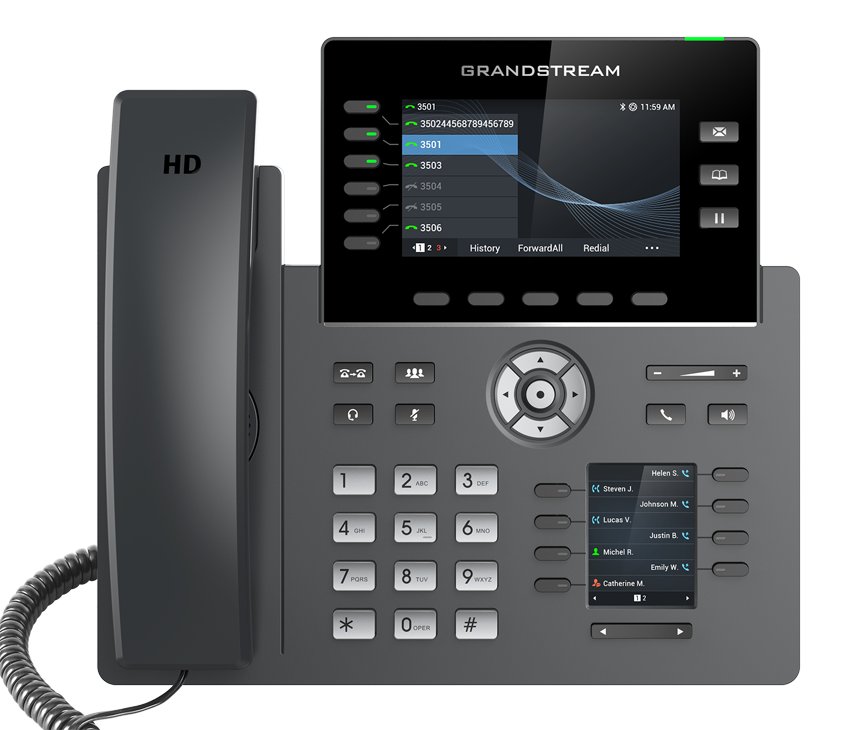
Devices such as Grandstream’s IP phones are at the forefront of this evolution. Designed for rapid deployment and remote management, these phones support quick provisioning, which makes expanding or adjusting the system seamless. Large enterprises deploy these across hundreds of sites, ensuring consistency, ease of management, and quick updates. Smaller teams benefit from customizable features like personalized call routing and user-specific settings, aligning their communication tools precisely with operational needs.
Network quality remains a critical focus. Organizations prioritize Quality of Service (QoS), bandwidth management, and network segmentation to ensure voice traffic gets priority, preventing delays and call disruptions. These measures help maintain clear, reliable communication even during peak hours, ensuring that expanding or customizing the telephony system doesn’t compromise call quality. Proper infrastructure ensures that voice remains crisp and dependable, supporting business continuity.
The adoption of cloud-based, scalable solutions reflects a broader push toward operational efficiency. Integrations with customer management platforms, automation of routine tasks, and support for remote workers make these systems essential in today’s fast-paced environment. As organizations embrace these tools, they are building resilient, adaptable communication networks that support growth without sacrificing reliability or performance. The move toward more flexible, cloud-enabled telephony is reshaping how businesses connect internally and with their customers, driving both agility and professionalism.
Investing Wisely: Cost-Effectiveness and Long-Term Value in Telephony Solutions
When evaluating customized telephony solutions, the initial investment might seem steep, especially with premium devices like Grandstream’s IP phones and management platforms. However, focusing on long-term value reveals a clearer picture. These systems often deliver savings through reduced maintenance costs, minimized downtime, and streamlined operations. Centralized platforms like GDMS enable remote provisioning, updates, and troubleshooting, which cut IT labor and prevent costly disruptions. Over time, these efficiencies translate into a strong return on investment that justifies the upfront expense.
Beyond hardware, operational improvements significantly boost value. Features like personalized call routing, auto-attendants, and CRM integration enhance response times and customer satisfaction. Faster, more efficient interactions result in fewer missed calls, quicker issue resolution, and happier clients. These improvements boost overall productivity and can lead to increased revenue, often outweighing initial costs in the long run. Well-designed systems become strategic assets that support business growth and resilience.
Deploying scalable solutions such as Grandstream’s mass deployment IP phones further amplifies cost-effectiveness. These devices support rapid, remote provisioning, making it easy to add or remove users without extensive downtime or technical headaches. As your organization expands, this flexibility ensures your communication infrastructure adapts smoothly, avoiding costly overhauls. The ability to grow without major disruptions keeps expenses predictable and manageable.
Assessing return on investment involves looking beyond the sticker price. When a tailored telephony setup reduces operational bottlenecks, improves responsiveness, and enhances customer interactions, the financial benefits multiply. The efficiencies gained often translate into tangible savings and increased revenue streams, making the initial investment a strategic move rather than a mere expense. Over time, the value of a reliable, flexible communication system becomes evident in improved business performance.
Choosing solutions like Grandstream’s scalable devices and cloud management plans enables organizations to maximize their investment. These tools provide not only advanced features but also a future-proof infrastructure that evolves with your needs. The combination of cost savings, operational agility, and improved customer experience makes a compelling case: a well-implemented, customized telephony system delivers long-term value far beyond the initial outlay.
Real-World Impact: How Customized Telephony Transforms Daily Operations
Customized telephony solutions have a tangible impact on daily operations, often transforming how teams communicate and serve customers. For example, when a retail chain deploys Grandstream IP phones with tailored auto-attendants and call routing, they experience shorter wait times and a more professional customer experience. Customers feel valued when their calls are directed efficiently, making interactions smoother and boosting overall satisfaction.
Inside the organization, employees benefit from personalized device settings that streamline their workflows. Quick-dial buttons, integrated contacts, and role-specific call handling reduce time spent navigating menus or waiting for support. This setup allows staff to focus on their core tasks, increasing productivity and reducing frustration. When communication tools are aligned with actual job functions, teams operate more seamlessly.
Real-world examples highlight how flexible solutions adapt to various industries. A healthcare provider, for instance, uses custom call routing to direct patient calls to the appropriate departments instantly, improving response times and patient experience. Similarly, remote sales teams equipped with cloud-managed systems stay connected effortlessly, ensuring no missed opportunities regardless of location. These practical applications demonstrate how tailored telephony keeps operations running smoothly and efficiently.
Reliability is another key benefit. When systems are configured with personalized features, users encounter fewer disruptions and clearer calls. This stability is essential for maintaining strong customer relationships and internal collaboration. Devices with role-specific settings also enable quick access to frequently used functions, making daily routines more efficient and less error-prone.
Scalability plays a vital role as organizations grow. With solutions like Grandstream’s mass deployment IP phones and cloud management platforms, adding new users or expanding to new locations becomes straightforward. Devices can be provisioned remotely in minutes, avoiding lengthy setups or service interruptions. This flexibility ensures that the communication infrastructure keeps pace with organizational expansion.
Ultimately, customized telephony isn’t just about technology—it’s about empowering people and streamlining processes. When communication systems are designed around real-world needs, every call and interaction becomes an opportunity for better service, faster response, and stronger relationships. These practical benefits show that tailored solutions are vital tools for achieving operational excellence every day.

Key Strategies for Tailoring Telephony: Features, Devices, and Network Optimization
Customized telephony solutions succeed when every feature and device aligns seamlessly with an organization’s specific needs. Designing call routing, auto-attendants, and user interfaces tailored to actual workflows helps reduce confusion and speeds up handling times. When systems serve the people using them, responsiveness improves, making daily operations more efficient and less frustrating.
Device compatibility and smooth integration are equally vital. Selecting the right IP phones, such as Grandstream’s models, ensures reliable communication across hardware. These devices can be customized with programmable keys, personalized contacts, and user-specific settings, streamlining individual workflows. Managing them through a unified platform allows for remote configuration, updates, and monitoring, saving time and minimizing errors. This level of control makes scaling and adjusting setups straightforward as your organization grows.
Network optimization should never be overlooked. Prioritizing Quality of Service (QoS) settings guarantees voice traffic receives sufficient bandwidth, preventing delays and call quality issues. Segmenting the network to keep voice data separate from other digital traffic reduces latency and packet loss, especially during busy periods. Ensuring robust bandwidth and applying security measures like encryption protect call integrity and confidentiality, building trust in your communication system.
Scalability remains a key concern. As your organization expands, your telephony system must grow without causing disruptions. Cloud management platforms like GDMS facilitate the remote provisioning of new devices and features, enabling quick deployment across multiple locations. This flexibility supports rapid onboarding, minimizes downtime, and keeps your infrastructure aligned with evolving business needs.
Personalization extends beyond initial setup. Allowing users to customize quick-dial buttons, presence indicators, and call handling rules empowers them to work more efficiently. When employees can tailor their communication tools, they engage more actively and respond faster, enhancing overall productivity. This user-centric approach makes the entire system more adaptable and effective.
Focusing on these core areas—tailored features, device integration, network optimization, scalability, and user personalization—transforms a basic communication setup into a strategic asset. It supports operational goals, improves daily workflows, and prepares your organization to meet future demands with confidence. Seamless integration and thoughtful design turn everyday calls into powerful tools for growth and success.