Beyond her legendary beauty and romantic tales, Cleopatra VII’s true legacy lies in her exceptional intellect, strategic diplomacy, and cultural mastery. She was a ruler who understood that sustainable power depended on wisdom, multilingual communication, and political savvy, navigating Egypt’s turbulent history with resilience and foresight. Her ability to blend Greek and Egyptian traditions, forge powerful alliances with Rome’s Julius Caesar and Mark Antony, and leverage scholarly knowledge made her a formidable force—far from a mere seductress. This artistic portrayal reveals her as a leader driven by intelligence, symbolism, and courage, redefining what it means to wield influence. Could her greatest strength be her mind? Cleopatra’s story challenges us to see leadership rooted in resilience, cultural literacy, and strategic thinking, inspiring future generations to value wisdom over superficial charm.
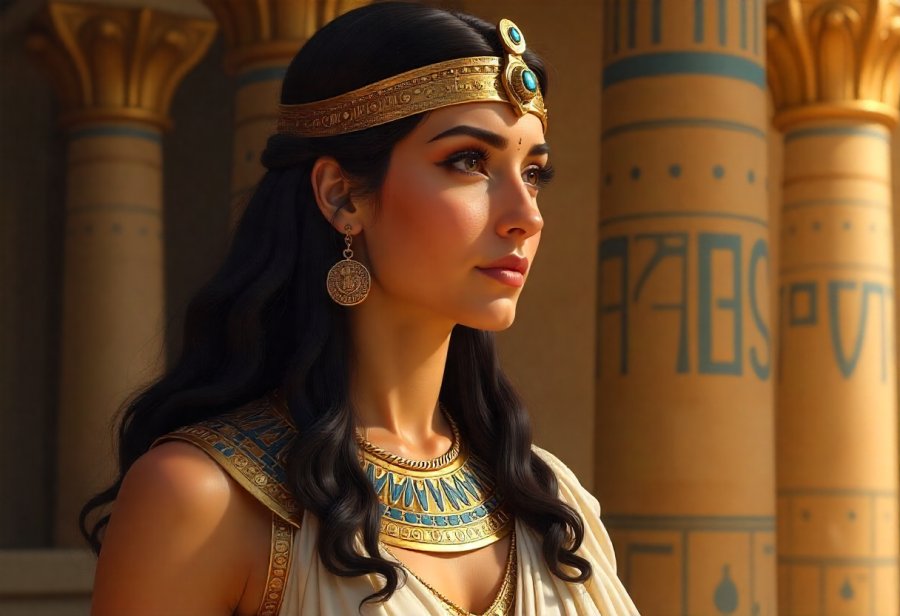
Unveiling Cleopatra: Beyond Beauty to a Legacy of Wisdom and Strategy
Cleopatra VII is often remembered for her beauty and the dramatic stories that surround her life, but her true legacy lies in her extraordinary intellect and political acumen. She was a ruler who understood that sustainable power depended on strategic thinking, diplomacy, and a deep knowledge of her world—qualities that allowed her to navigate one of the most turbulent eras in Egyptian history. Far from a mere figure of glamour, Cleopatra was a sharp strategist whose influence extended well beyond her personal charm or appearance.
Her intelligence was her greatest asset. Fluent in multiple languages and well-versed in philosophy, science, and literature, she approached leadership with a scholarly mindset. Her education was not just for personal enrichment; it was a tool for diplomacy and influence. Cleopatra’s mastery of knowledge enabled her to communicate directly with officials and scholars from diverse cultures, building trust and forging alliances that were critical to her survival.
What set Cleopatra apart was her ability to combine her cultural expertise with political cunning. She understood that her authority as Pharaoh rested on a blend of tradition, diplomacy, and intellectual strength. Her strategic use of language, symbolism, and shared cultural values helped her project an image of divine legitimacy—one rooted in wisdom and resilience. This allowed her to command loyalty in her court and to negotiate effectively with Rome’s most powerful leaders.
Her leadership was characterized by resilience and adaptability. Cleopatra knew that influence was often about timing and perception. She skillfully turned internal court rivalries into opportunities for strengthening her position and managed external threats with calculated moves. Her ability to remain flexible and confident in her decisions kept her several steps ahead of her enemies, ensuring her long-term survival and that of Egypt.
Ultimately, Cleopatra’s legacy challenges the stereotype of female rulers as reliant on beauty or charm. Instead, she demonstrated that true power is rooted in mental agility, cultural literacy, and strategic foresight. Her story reminds us that lasting influence comes from wisdom, resilience, and the capacity to leverage knowledge—traits that remain relevant in leadership today.
Her example underscores that leadership rooted in intellect can leave a profound and enduring impact. Cleopatra’s mastery of diplomacy, scholarship, and cultural diplomacy transformed her into a figure whose influence transcended her time. She exemplifies how intelligence and strategic thinking can forge a legacy that withstands centuries, inspiring future generations to value wisdom as the foundation of true power.
Origins and Power: How Cleopatra’s Greek-Egyptian Heritage Shaped Her Reign
Cleopatra VII’s background is essential to understanding her remarkable leadership and strategic mind. Born into the Macedonian Ptolemaic dynasty that took control of Egypt after Alexander the Great’s empire fragmented, she inherited a unique blend of Greek and Egyptian traditions. Her ancestors, Macedonian generals, established a ruling line that combined Hellenistic customs with Egypt’s ancient cultural heritage. This dual heritage gave Cleopatra a distinctive perspective—she was both a Greek princess and a guardian of Egypt’s rich traditions. Growing up amid court intrigues and internal family rivalries, she learned early that power depended on navigating complex political and cultural landscapes.
Her family’s internal conflicts were intense and often violent, shaping her understanding of court politics from a young age. When her father, Ptolemy XII, died, Cleopatra faced the challenge of securing her position as queen. Despite her youth, she quickly demonstrated her political savvy by asserting her authority amid rival claimants and factional struggles within the family. Her early reign involved consolidating power in a society where legitimacy often relied on strategic alliances and diplomacy. Her ability to blend her Greek heritage with Egyptian customs helped her craft a unique identity as a ruler capable of uniting diverse influences.
Egypt at the time was a wealthy and strategically vital territory, caught between the expanding Roman Empire and Persian influence. Its wealth, access to Mediterranean trade routes, and cultural heritage made it a prize for regional powers. Internally, court factions vied fiercely for influence, and Cleopatra’s rise was not just a matter of inheritance but a result of shrewd maneuvering through these internal struggles. She used diplomacy, alliances, and cunning to secure her throne, often relying on her intelligence and political instinct to outwit rivals.
Externally, Egypt faced the threat of losing its independence as Rome’s reach grew. Cleopatra understood that her survival depended on managing these external pressures skillfully. Her diplomatic finesse shone brightest in her dealings with Rome’s most influential leaders, Julius Caesar and Mark Antony. Recognizing that alliances with Rome could serve as both shield and sword, she employed marriages, negotiations, and cultural diplomacy to extend Egypt’s influence and preserve its sovereignty. Her strategic moves were calculated to maximize Egypt’s strength amid regional upheavals.
Her early decision to align with Julius Caesar marked a turning point. After internal conflicts with her brother, Ptolemy XIII, she sought Caesar’s support, using her wit and cultural diplomacy to win his favor. This bold move not only restored her power but also set the stage for future alliances. When she later partnered with Mark Antony, her approach remained rooted in strategic calculation rather than personal affection, exemplifying her mastery of political maneuvering. These choices underscored her resilience and ability to adapt to shifting circumstances.
Alexandria, her capital, was more than just a political hub; it was a beacon of culture and scholarship. Known for its famous Library of Alexandria, it embodied her dedication to learning and knowledge. Cleopatra’s curiosity and education—she reportedly spoke multiple languages and engaged with scholars—shaped her worldview. Her appreciation for scholarship was a strategic asset, allowing her to foster alliances and deepen influence through shared learning and cultural exchange. This intellectual environment reinforced her image as a ruler who valued wisdom as much as power.
In sum, Cleopatra’s origins and the turbulent political landscape of her time laid a foundation that showcased her resilience and strategic acumen. Her ability to navigate a complex web of Greek and Egyptian traditions, internal family rivalries, and external threats defined her as a leader who thrived on adaptability and intelligence. This background not only prepared her for the challenges ahead but also underscored the importance of cultural fluency and political savvy—traits that made her one of history’s most formidable and enduring figures.
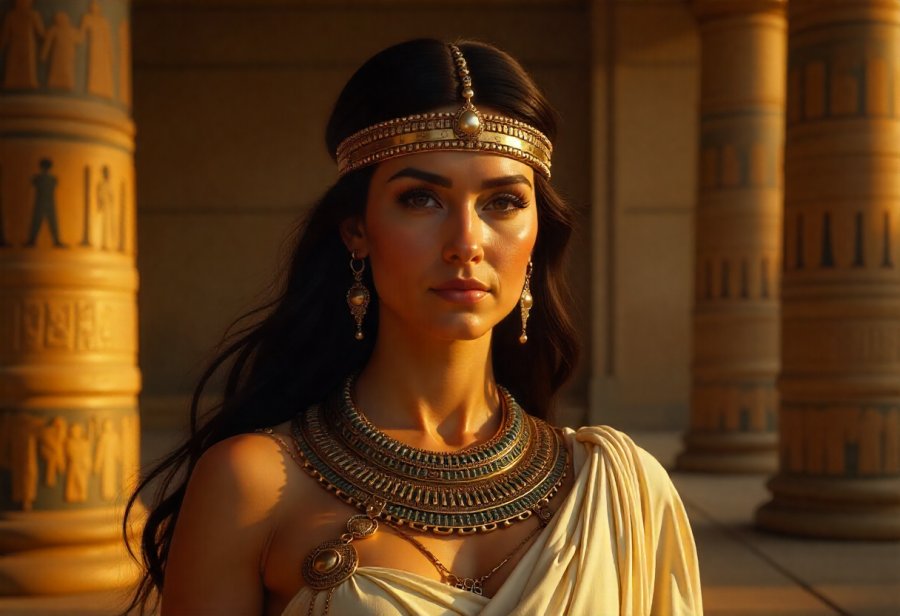
A Scholar-Queen’s Edge: Cleopatra’s Multilingual Mastery and Intellectual Depth
Cleopatra’s intelligence was one of her most defining qualities, setting her apart in a male-dominated world of power. She was fluent in as many as nine languages, including Egyptian, Greek, Latin, and Aramaic, which gave her a distinct advantage in diplomacy. Speaking directly to officials, scholars, and regional leaders in their native tongues allowed her to build trust and foster alliances with a level of nuance that few could match. Her linguistic mastery was not just impressive; it was a deliberate tool to enhance her influence and credibility across diverse cultures.
Her scholarly pursuits extended beyond language. Cleopatra was deeply engaged with philosophy, science, literature, and history. Her education was shaped by the intellectual treasures of Alexandria’s famed Library, where she immersed herself in the works of the greatest thinkers of her time. This broad knowledge base was more than personal interest—it was a strategic asset. Her familiarity with scientific ideas and philosophical debates enabled her to connect with scholars and leaders alike, projecting an image of wisdom and authority.
This intellectual foundation strengthened her capacity to craft complex alliances and outmaneuver rivals. Cleopatra understood that influence depended on ideas, culture, and strategic thinking, not just military might or personal charm. Her ability to interpret and communicate sophisticated concepts gave her an edge in negotiations, allowing her to persuade and negotiate with confidence. Whether dealing with Roman officials or Egyptian courtiers, her intelligence allowed her to respond with clarity and purpose, often turning the tide of political conversations in her favor.
Her mastery of culture and language was closely tied to her identity as a divine ruler. Cleopatra knew that projecting wisdom and knowledge reinforced her legitimacy as Pharaoh. Her engagement with Egyptian religious traditions, combined with her Hellenistic education, created a compelling image of a ruler who embodied both ancient divine authority and worldly intelligence. This duality helped her connect with her people’s religious beliefs while navigating the complex political landscape of the Mediterranean.
Her relationships with Julius Caesar and Mark Antony exemplify how her intellect shaped her diplomacy. She used shared cultural interests and intellectual pursuits to deepen her alliances, often participating in debates, scholarly exchanges, and cultural gestures. Her confidence in engaging with intellectual elites elevated her status, showing that her leadership was rooted in a profound respect for knowledge and learning.
Throughout her reign, Cleopatra demonstrated that true leadership relies on resilience, adaptability, and the effective use of knowledge. Her scholarly pursuits were not mere hobbies but essential tools for statecraft. Her ability to learn, analyze, and apply information strategically allowed her to withstand internal upheavals and external threats, maintaining her authority and Egypt’s independence.
Cleopatra’s legacy as a scholar-queen underscores the vital role of intellect in leadership. She understood that influence is rooted in understanding, education, and cultural diplomacy. Her mastery of language and her dedication to scholarship made her a formidable figure whose impact extended beyond her lifetime. Her story continues to inspire us to see wisdom, curiosity, and strategic thinking as the true sources of lasting power.
Mastering the Art of Leadership: Cleopatra’s Diplomacy, Cunning, and Cultural Finesse
Cleopatra’s leadership style was defined by her mastery of strategic diplomacy and political cunning, which kept her ahead in a volatile world. She understood that power was often projected more effectively through carefully crafted alliances, cultural symbolism, and impeccable timing than through brute force. Her ability to read her environment—whether internal court rivalries or external threats—allowed her to adapt her approach swiftly and effectively. Cleopatra’s influence was rooted in her skillful use of diplomacy, turning potential risks into opportunities for long-term gain through bold yet calculated moves.
Her alliance with Julius Caesar exemplifies her strategic mindset. After internal conflicts with her brother, Ptolemy XIII, Cleopatra recognized the importance of decisive action. She seized the moment to meet Caesar secretly, using her wit and cultural diplomacy to secure his support. This bold move not only restored her throne but also set the stage for future alliances. Her relationship with Mark Antony was similarly driven by strategic considerations, with her leveraging her intelligence and cultural influence to deepen bonds that would serve Egypt’s interests, not just personal loyalty.
Cleopatra’s decisions balanced boldness with subtlety. She knew that projecting strength didn’t always mean overt displays of power; instead, she used nuanced timing and symbolic gestures rooted in Egyptian and Hellenistic traditions. Managing her court factions required her to communicate across diverse groups, employing her multilingual skills and scholarly background. Her ability to navigate complex power dynamics was central to her resilience, allowing her to respond decisively to challenges while maintaining her long-term goals.
Her governance approach was fluid, viewing power as a multifaceted tool. Cleopatra combined cultural symbolism, diplomatic finesse, and strategic risk-taking to craft a resilient rule. Her mastery over these elements enabled her to maintain stability amid internal rivalries and external threats. Each move, whether an alliance, a courtly gesture, or a calculated confrontation, was aimed at preserving Egypt’s sovereignty and extending its influence.
Throughout her reign, Cleopatra demonstrated remarkable adaptability. When faced with internal conflicts, she responded with a mix of diplomacy and firm action, always keeping her eye on the broader objective of Egypt’s survival and strength. Her early alliance with Caesar was a calculated effort to restore her authority, while her partnership with Mark Antony followed the same pattern of strategic planning. These choices reveal her capacity to stay flexible and resilient, even amid shifting political landscapes.
Cleopatra’s techniques reveal her view of power as a dynamic, nuanced force—one that relies heavily on cultural literacy, timing, and symbolism. She approached leadership as an ongoing dance of influence, where perception and influence mattered as much as raw strength. Her ability to think several steps ahead and adapt her tactics kept her several moves ahead of her enemies, solidifying her reputation as one of history’s most shrewd and resilient rulers.
In the end, Cleopatra’s leadership exemplifies how intelligence, cultural sensitivity, and strategic finesse can forge a lasting legacy. Her mastery of diplomacy and symbolism, combined with her capacity for calculated risk-taking, made her a formidable figure whose influence endured long beyond her reign. Her story reminds us that true power often resides in the subtle art of navigating complexities with wit, resilience, and cultural insight, leaving a blueprint for resilient leadership rooted in intelligence rather than dominance.
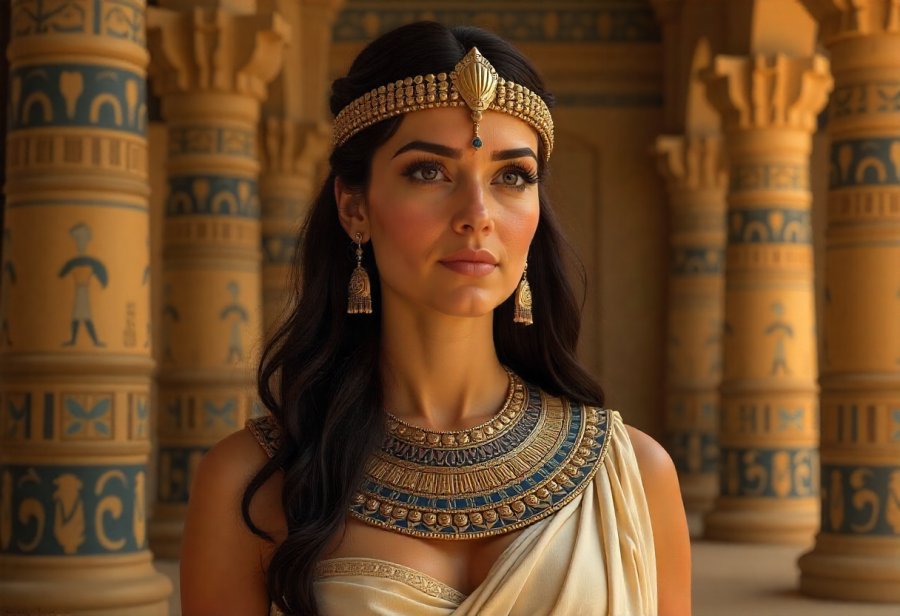
Enduring Influence: Lessons from Cleopatra’s Legacy of Intelligence, Resilience, and Cultural Diplomacy
Cleopatra’s influence extends far beyond her personal story of romance and political intrigue. She exemplifies how true power is rooted in intellect, strategic thinking, and cultural understanding. Rather than relying solely on territory or superficial charm, she wielded influence through knowledge, diplomacy, and cultural diplomacy—tools that allowed her to shape history in lasting ways. Modern scholars increasingly see her as a master strategist who used her multilingual abilities, scholarly pursuits, and diplomatic finesse to outmaneuver rivals and secure Egypt’s survival. Her legacy highlights the importance of education and cultural exchange as essential components of effective leadership—lessons that remain relevant today.
Her story also challenges the traditional narratives about female rulers. Cleopatra proved that leadership driven by intelligence and resilience could leave an indelible mark on history. Navigating a male-dominated world, she demonstrated that strength comes from mental agility, strategic foresight, and adaptability, not gender or superficial allure. Her example continues to inspire conversations about female empowerment, emphasizing that influence depends on competence and resilience rather than societal expectations or superficial traits. Cleopatra’s ability to command respect through wisdom and strategic skill redefined what it means to lead.
Throughout history, Cleopatra has become a symbol of cultural diplomacy and intellectual prowess. Her mastery of language, engagement with scholars, and ability to communicate across cultural boundaries made her a formidable figure. By blending Egyptian religious legitimacy with Greek and Roman political savvy, she projected an authority rooted in both tradition and innovation. Her leadership demonstrated that understanding and respecting different cultural perspectives could serve as a strategic advantage, forging alliances that extended Egypt’s influence well beyond her reign.
Her resilience in the face of internal upheavals and external threats underscores her enduring legacy. Cleopatra’s capacity to adapt—whether through shifting alliances, managing court rivalries, or responding to regional crises—showed a level of strategic flexibility few leaders possess. Her ability to recover from setbacks and turn crises into opportunities highlights the importance of mental agility and foresight. This resilience encourages modern leaders to embrace adaptability and strategic thinking as vital qualities in navigating complex political landscapes.
Cleopatra’s influence was fundamentally built on her mastery of the mind. Her knowledge, cultural literacy, and diplomatic skill created a legacy rooted in wisdom rather than conquest or charm alone. She understood that sustainable leadership depends on continuous learning, strategic foresight, and the courage to leverage these qualities effectively. Her story reminds us that influence isn’t just about power—it’s about the capacity to think several steps ahead, inspire loyalty, and adapt to changing circumstances through intelligence and resilience.
In the end, Cleopatra’s enduring impact teaches that leadership rooted in intellect can surpass even the most impressive displays of force. Her combination of scholarly pursuits, diplomatic finesse, and cultural insight set a standard for resilient, strategic leadership. Her legacy continues to inspire us to value wisdom, adaptability, and cultural literacy as the true foundations of lasting influence. Cleopatra’s life remains a testament to the power of the mind in shaping history and leaving a mark that endures through the ages.